
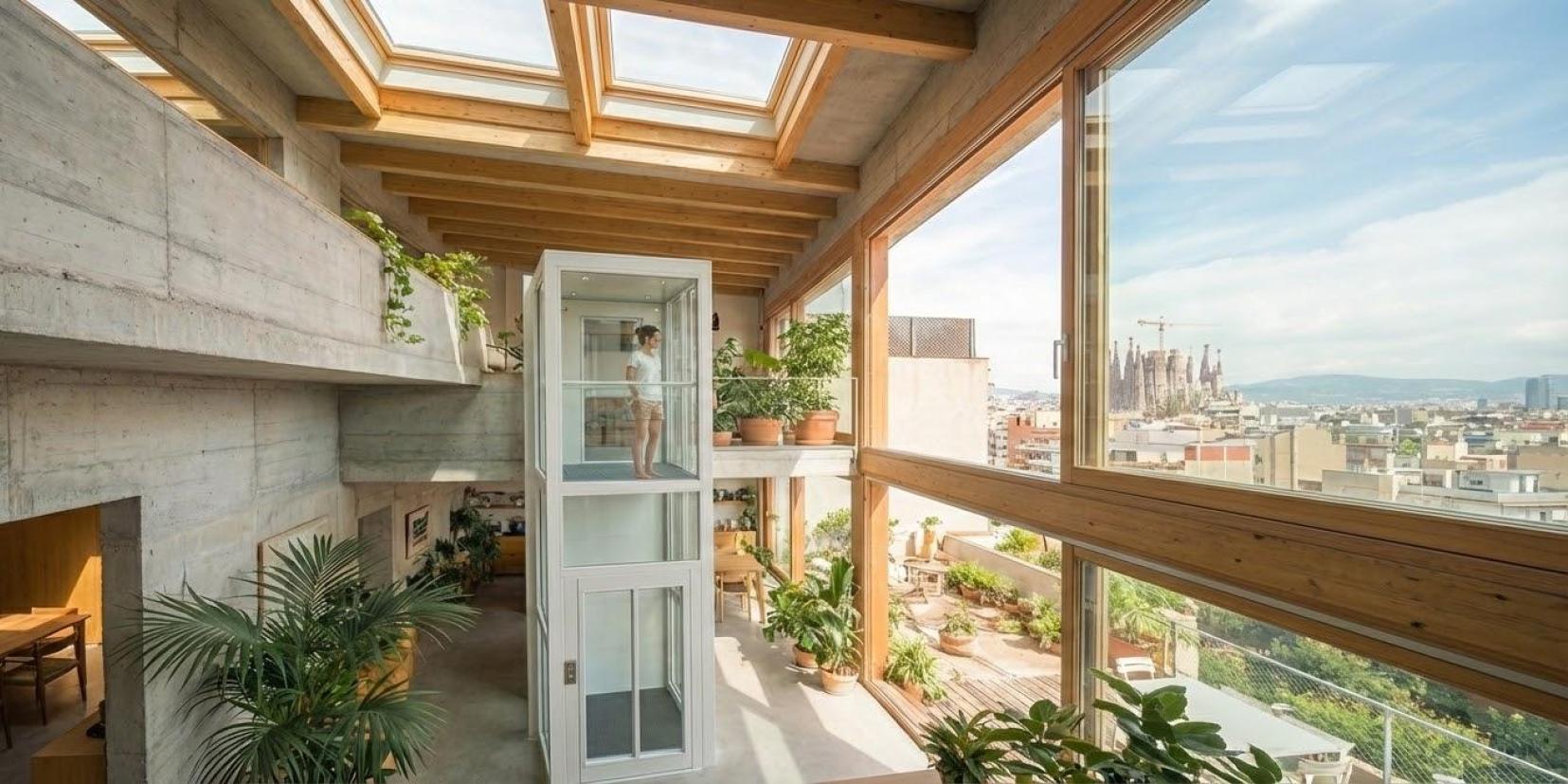
Glass Lifts Guide 2026 for Your Barcelona Renovation
Installing a glass lift in your home in Barcelona is one of those decisions that can transform space, lifestyle, and property value — but it must be planned early and executed properly. In a Barcelona renovation, your choice of vertical transport impacts design, structure, cost, and long-term satisfaction.
Before we get into the hair detail, may you don’t know us yet, here’s a quick introduction: we are ERA architects. More specifically, I’m Esther Rovira, an architect and passive house designer based in Barcelona and Catalonia, specialising in the construction and renovation of passive and energy-positive homes. In this post, “Glass Lifts Guide”, you get:
- What a glass lift is
- How it compares to a traditional lift
- Pros & cons of each
- How much they cost in Barcelona (2026 estimates)
- What you need to know about installation pathways
- A clear comparative chart
- Decision-making questions to help you choose
We’ll keep it direct, honest, and full of the SEO keywords that matter for anyone searching glass lifts Barcelona renovation, Barcelona contractor lift installation, Barcelona architect lift planning — without mentioning specific brands. Let’s dig into it!
What Is a Glass Lift?
A glass lift is an elevator with transparent or semi-transparent cabin walls and often transparent shaft panels. It serves the same purpose as a traditional elevator — vertical transport — but with a focus on:
- Light and openness
- Aesthetic visibility
- Architectural integration
- Social and experiential value
Glass lifts are chosen in both residential and commercial projects that emphasize design, transparency, and connection with space — common priorities in modern Barcelona renovations. Unlike traditional enclosed lifts, a glass lift makes motion part of the experience: passengers see the floor and surroundings, creating a sense of spaciousness even in small buildings.
Why a Glass Lift in a Barcelona Renovation?
Barcelona’s architecture ranges from historic modernist buildings to contemporary penthouses and luxury townhouses. Reasons owners consider glass lifts include:
- Design continuity with open plan interiors
- Maximizing light flow in stair wells or double-height spaces
- Enhancing property value with a statement feature
- Improving accessibility across multiple levels without sacrificing style
For design-oriented projects, your Barcelona architect will typically propose the lift location, shaft design, and integration with staircases, terraces, and atriums.
How Glass Lifts Work
A glass lift installation involves:
- Structural support (reinforced frameworks)
- Transparent or polycarbonate panels
- Safety systems (fire, emergency communication, sensors)
- Drive system (hydraulic or traction)
- Integration with building plans
Your Barcelona contractor must coordinate:
- Foundation and shaft construction
- Electrical wiring and safety cabling
- Coordination with carpenters, plasterers, painters
- Compliance with Spanish lift codes and building permits
In Barcelona, lift installations require permits through the local district Ajuntament and compliance with national elevator standards — this is not a DIY upgrade.
Glass Lift vs Traditional Lift: What’s the Real Difference?
Before we talk about pros, cons, and costs, it’s important to see the fundamental differences between types.
Traditional Lift
- Enclosed cabin with walls added to the structure
- Installed by multi-agents (foundations, metal structure, machine, glass installer) (then, higher risk of cahos from a lack of renovation leadership and focus)
- Often conventional metal finishes
- Focus on function over experience
Glass Lift
- Transparent cabin or shaft panels
- Visual connection between floors
- Design feature rather than just functional
- One supplier and installer minimizes renovation incidents
Let’s break this down in detail.
Pros of Glass Lifts
✔ Visual Impact & Interior Design
- Creates a focal point in the home
- Adds depth and dimension
- Makes spaces feel larger
- Works well with open staircases, atriums, and double heights
A Barcelona architect will often recommend glass lifts where light and line-of-sight matter.
✔ Better Natural Light
- Transparent surfaces allow daylight into interior cores
- Reduces need for artificial lighting in stairwells
- Enhances ambiance and perceived spaciousness
This is especially relevant in Barcelona renovations where maximizing light is a priority.
✔ Enhanced Property Value
Glass lifts are a design asset that prospective buyers and tenants perceive as premium. In Barcelona’s competitive property market, well-designed vertical circulation can differentiate a home.
✔ Accessibility Without Compromise
If mobility access is needed (elderly, children, or future mobility planning), a glass lift provides functionality without sacrificing style.
✔ Experience & Interaction
A lift becomes more than transport; it becomes part of the architectural experience — especially in multi-level residential villas, lofts, or triplex apartments.
Cons of Glass Lifts
✘ Higher Cost
Glass lifts typically cost more than traditional lifts because:
- Materials (glass, polishing, framing) are pricier
- Custom design often required
- Structural reinforcement often more complex
We will unpack costs in detail later.
✘ Privacy Considerations
Transparency means passengers are visible. In some configurations where lifts face bedrooms, living rooms, balconies, or terraces, privacy solutions may be necessary.
✘ Maintenance & Cleaning
- Glass surfaces show fingerprints and smudges
- Maintenance may require specialized cleaning
- Scratches can be more noticeable
Regular maintenance is essential for aesthetics.
Pros of Traditional Lifts
✔ Lower Base Cost
Traditional enclosed lifts are typically less expensive upfront.
✔ Better Privacy
Opaque walls mean:
- No visibility between levels
- Better suited in bedrooms and private areas
✔ Easier to Integrate in Small Shafts
Traditional lift assemblies can fit into narrow or compact cores without complex glass frameworks.
✔ Simpler Material Finishes
Walls, ceilings, and lighting are standard, reducing customization costs.
Cons of Traditional Lifts
✘ Less Aesthetic Impact
Traditional lift installations rarely contribute to interior design value.
✘ Missed Architectural Opportunity
In modern renovations that prioritize light and openness, a traditional lift often feels like a missed design moment.
✘ Dark Vertical Cores
Opaque shafts can create dark, enclosed circulation zones requiring artificial lighting.
Prices in Barcelona (2026 Estimates)
Below are approximate installed costs for residential lifts in Barcelona — realistic figures for planning your Barcelona renovation. ⚠️ Note: These are estimates. Final prices depend on building structure, permits, number of floors, customization, and contractor rates.
Traditional Lift
| Feature | Typical Cost |
| 4 stops (ground + 3 floors) | €40,000 – €55,000 |
| Shaft construction | Included/varies |
| Cabin size | ~90×140 cm Standard |
| Electricity & permits | Included in estimate |
| Installation time (multi-agent) | 6–12 weeks |
Total ballpark: €40k – €55k
Glass Lift
| Feature | Typical Cost |
| 4 stops (ground + 3 floors) | €55,000 – €85,000 |
| Glass cabin & shaft integration | Premium materials |
| Cabin size | ~90×140 cm Standard |
| Electrical + permits + safety | Included |
| Installation time (1 agent) | 4–8 weeks |
Total ballpark: €55k – €85k
Glass Lift vs Traditional Lift — Comparative Chart
| Feature | Glass Lift | Traditional Lift |
| Visual Experience | ✔ Excellent | ✘ Functional only |
| Natural Light | ✔ High | ✘ Low |
| Aesthetic Value | ✔ Premium | ✘ Low |
| Privacy | ✘ Low | ✔ High |
| Cost | Higher | Lower |
| Maintenance | Moderate | Lower |
| Installation Complexity | Moderate (1 agent) | Higher (multi-agents) |
| Impact on Property Value | High | Moderate |
| Integration with Design | Excellent | Functional |
Installation Pathways in Barcelona
Choosing a lift is more than choosing the product. You must plan for:
Early Design Stage
Your Barcelona architect must:
- Identify the lift location
- Coordinate shaft routing
- Integrate with circulation spaces
- Plan for lighting and finishes
- Include in permit drawings
This ensures the lift doesn’t become a retrofit nightmare later.
Structural Requirements
Your Barcelona contractor must verify:
- Load-bearing capacity of floors
- Shaft foundation and reinforcement
- Ceiling penetrations
- Fire safety and egress routes
- Electrical panel capacity
In older Barcelona buildings, this step is critical.
Permits and Compliance
Elevator installations in Spain require:
- Building permit from Ajuntament
- Compliance with national lift safety code
- Scheduled inspections
- Registered installer confirmation
This is not optional!
Questions to Help You Decide
Before you commit, these questions might help you take decisions:
- Do you want the lift to be a design feature or purely functional?
Glass lifts add architectural value; traditional lifts prioritize cost. - Is privacy important where the lift faces rooms or living spaces?
Transparent cabins can expose interior views. - Is the budget flexible or fixed?
Glass lifts can be €10k–€30k more than traditional. - Will the lift be used frequently (daily family use) or occasionally (guests)?
Frequent use favors traditional reliability; design use favors glass. - Does your renovation include light-filled atriums or open stairwells?
If yes, glass lifts can enhance architectural rhythm. - Can lighting and shading be controlled if a glass lift introduces glare?
Your architect should model sunlight paths early. - Is simplicity more valuable than visual impact?
Traditional lifts are simple to integrate.
Final Thought: Making the Smart Choice
A glass lift is not a trend. It’s a design decision that can:
- Elevate spatial experience
- Increase property value
- Create visual continuity
- Maximize daylight
But it also:
- Costs more
- Needs careful privacy design
A traditional lift, on the other hand:
- Is more economical
But:
- Offers limited design impact
- Can make vertical circulation feel utilitarian
In most Barcelona renovation projects, the right choice depends on:
- Your design priorities
- Your budget
- Your daily usage
- The architectural context
- How early you make the decision with your Barcelona architect
Closing Advice
- Decide during design phase NOT during renovation
In a renovation, waiting too long to pick a lift is like deciding where the stairs go after the roof is on — costly and stressful.
Plan lift integration early with your Barcelona architect and let your Barcelona contractor coordinate execution wisely with a one-installer responsibility and gurantee. And it always starts with the right professional guidance. If you are considering implenting a Glass Lift in Barcelona, start with clarity — not assumptions. Book your online meeting so we can start heping you this week: BOOK a call Not ready yet? No problem, check our our other posts below that might keep helping you without contacting us directly.
I hope this post, “Glass Lifts Guide“, helps you take the next step.
Did we miss anything? Any burning questions? Leave them in the comments and we’ll be happy to help.
You migth be also interested in this other post: “Barcelona renovation permit: how long it takes”
See you on the next post,

P.S. Wanna get FREE tips for your project weekly? Yas! or follow us on Instagram and Facebook

Leave A Comment